19th ARCASIA Asian Congress of Architects opened in Shanghai to nearly 40,000 attendees
-Written by Wang Yiming, Lu Yejiong, Zhou Minghao
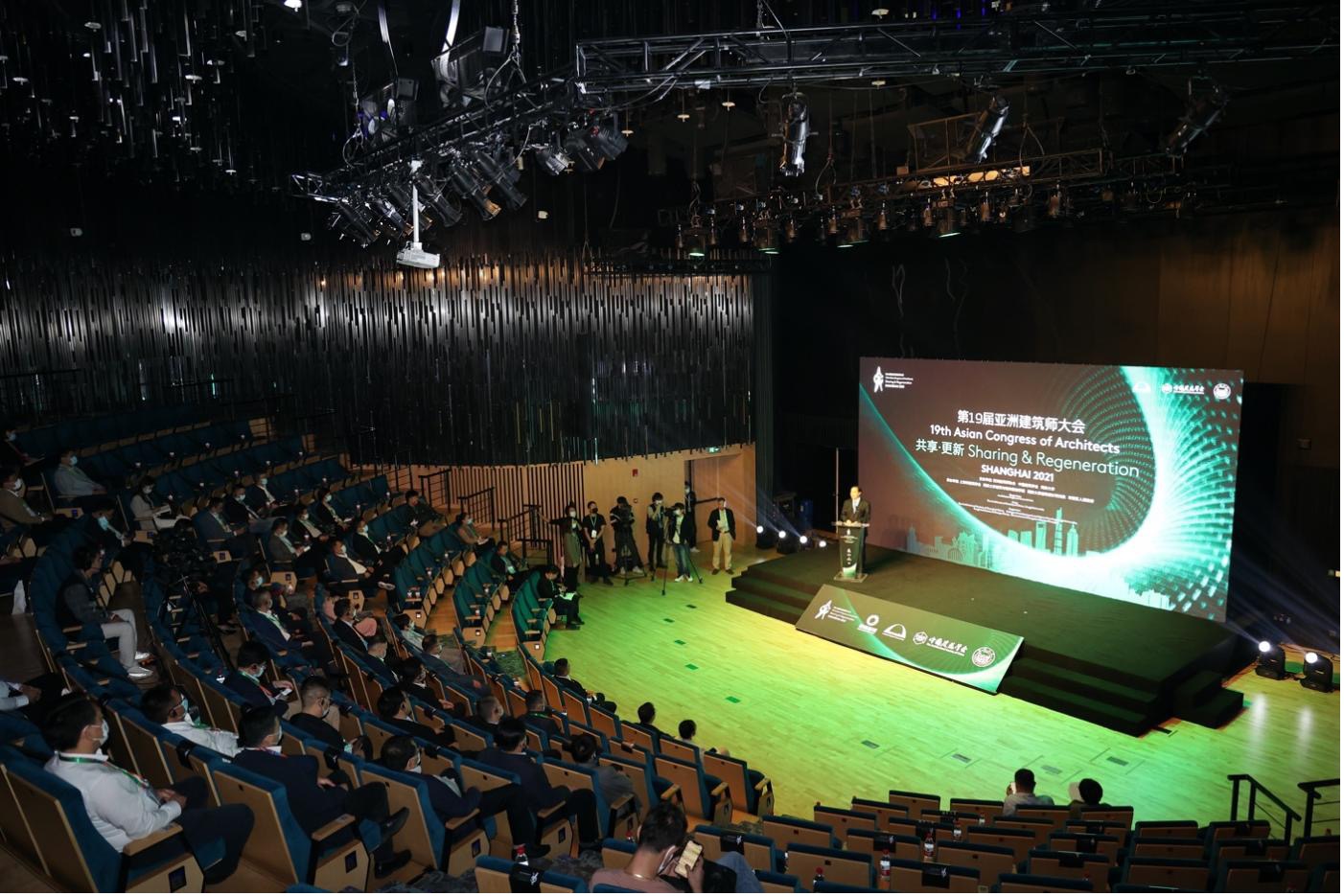
The 19th Asian Congress of Architects (ACA19) opening ceremony was held at the Nine Trees Future Arts Center in Fengxian District, Shanghai at 1:00 pm on November 1 Beijing time. The keynote speeches followed the opening ceremony.
Themed as “Sharing & Regeneration,” the ACA19 was co-hosted by the Architects Regional Council Asia (ARCASIA), the Architectural Society of China (ASC) and Tongji University, and co-organized by the Architecture Society of Shanghai China (ASSC), School of Architecture and Urban Planning of Tongji University, Architectural Design and Research Institute of Tongji University (Group) Co. Ltd. and Fengxian District People’s Government. Nearly 40,000 people, including speakers, experts, scholars and students within and outside of China attended the congress through a combination of online and offline methods to discuss the challenges and opportunities faced by Asian architecture and cities in the post-pandemic era and explore ways to share and update architectural design concepts among Asian countries and regions. The keynote speakers included:
- Cheng Taining, Member of the Chinese Academy of Engineering (CAE) and National Engineering Survey and Design Master,
- Wang Shu, Laureate of 2012 Pritzker Architecture Prize and Dean of the School of Architecture of China Academy of Art,
- Sarah Whiting, Dean of Harvard University Graduate School of Design,
- Rossana Hu, Co-founder of Neri & Hu Design and Research Office and John C. Portman Design Critic Professor in Architecture at Harvard University Graduate School of Design,
- Shirish Beri, a well-known Indian architect and two-time winner of the ARCASIA Awards for Architecture,
- Ary Indra, a well-known Indonesian architect and Chief Curator of the Indonesian Pavilion at the 2018 Venice Architecture Biennale,
- Boonsern Premthada, a well-known Thai artist and architect,
- Khondaker Hashibul Kabir, an emerging Bangladeshi architect and social activist
The opening ceremony
Professor Wu Jiang presided over the opening ceremony. Professor Wu Jiang, Zone C Vice President of the ARCASIA and Former Executive Vice President of Tongji University, served as the convener and host of the congress.
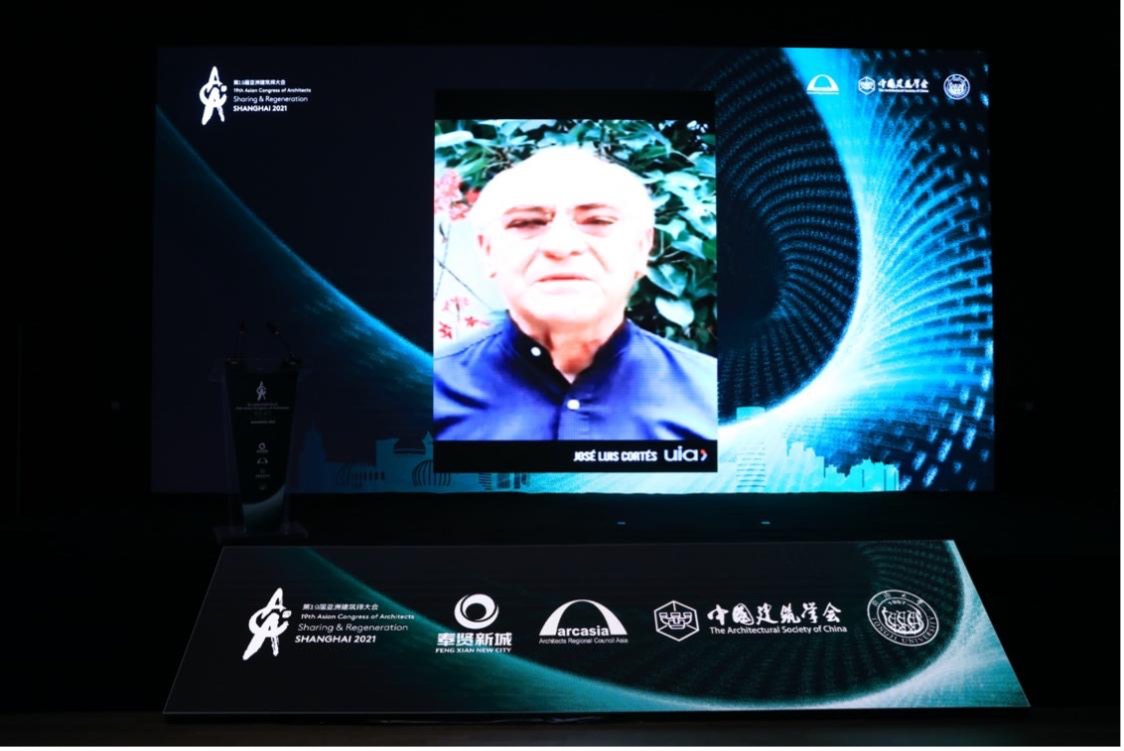
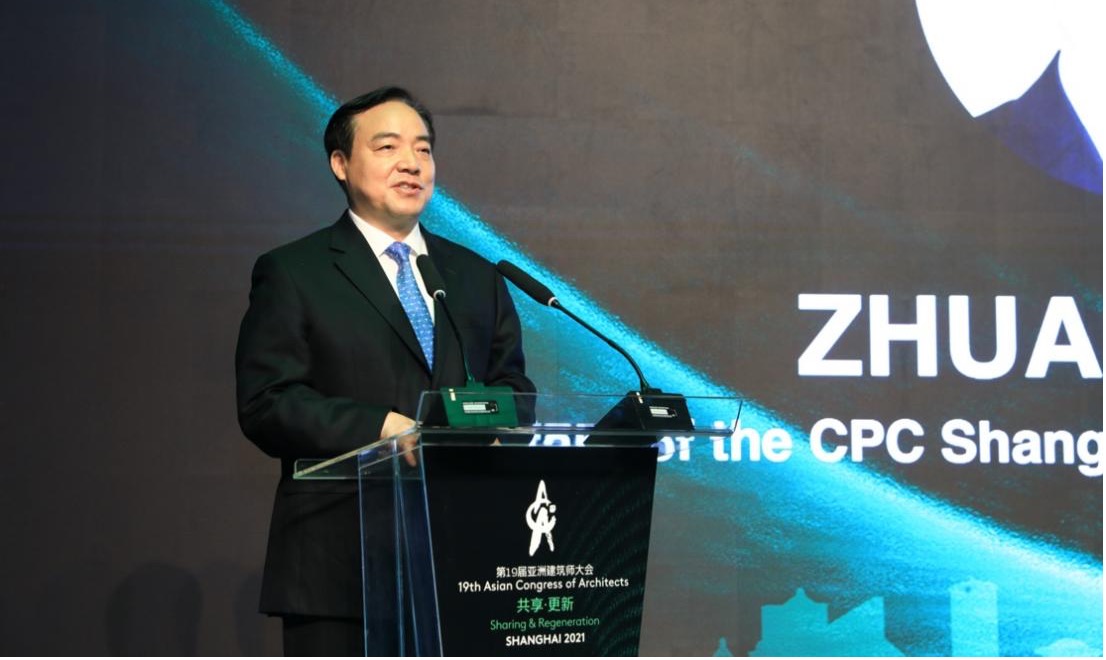
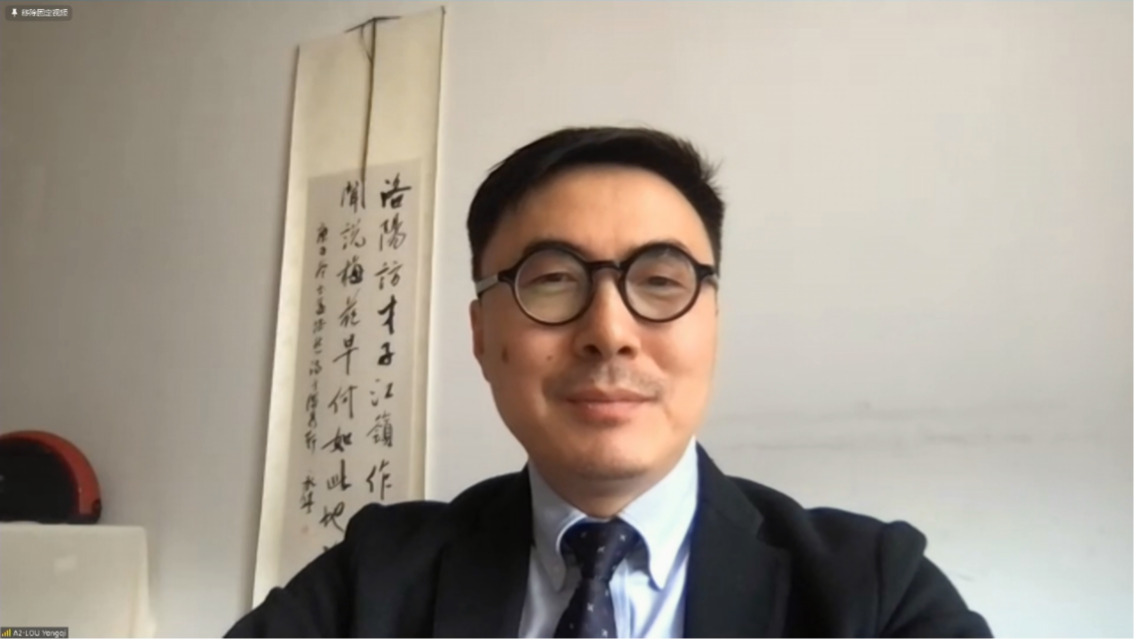
At the opening ceremony of the ACA19, Professor Wu Jiang began with a welcome speech. He mentioned the ARCASIA Awards for Architecture Ceremony that was successfully held the previous night, thanked the Fengxian District People’s Government for its strong support to the organization of the congress, and introduced the guests and keynote speakers of the opening ceremony. Then, Huang Yan, Vice Minister of the Housing and Urban-Rural Development of China, Rita Soh, President of the ARCASIA, Xiu Long, President of the ASC, Zhuang Mudi, Secretary of the CPC Fengxian District Committee, Lou Yongqi, Vice President of Tongji University, Jose Luis Cortes, President of the International Union of Architects (UIA), Victor Leonel, President of the Africa Union of Architects (AUA), and Erno Kalman, President of the Visegrad Four Architectural Foundation (V4AF), gave speeches successively.
In her speech, Vice Minister Huang Yan summarized the four general situations and major challenges facing China and other Asian cities now, including the COVID-19 pandemic, rapid urbanization, carbon emissions reduction and transformation of urban development from quantitative expansion to quality improvement. She pointed out that the congress provided an important platform for practitioners, experts and scholars engaged in architectural and urban design in Asian countries to share experiences and cope with these challenges together.
President Rita Soh believed that the pandemic has led to economic recession and Asian countries are facing major challenges unseen in a century. She pointed out that under such a background, the theme of the congress “sharing and regeneration” provides solutions for us to create more friendly Asian cities for sustainable development under the pandemic.
President Xiu Long said that with the help of the congress, the ASC hopes to have face-to-face exchanges with leaders and friends of the member states of the ARCASIA, actively participate in and support the activities of the ARCASIA, and jointly make more contributions to the development and progress of Asian architecture.
Secretary Zhuang Mudi introduced the construction vision of Fengxian New City enthusiastically to the experts and scholars at the congress. He said that Fengxian is committed to building an iconic city image, a distinctive city landscape, and a city culture with the atmosphere of mundane life. He welcomed Asian architects to start businesses and realize their architectural dreams in Fengxian.
Vice President Lou Yongqi pointed out that the theme of the congress echoes Tongji University’s mission of “serving the people and the world with one heart and on the same boat”. Under the pandemic, Asian architects need to communicate more with each other, make more voices on the global stage and make their own special contributions.
Keynote Speeches
After the opening ceremony, eight keynote speakers from different countries and regions, including China, the United States, India, Bangladesh, Thailand and Malaysia, delivered wonderful keynote speeches with different focuses. They discussed current development trends and characteristics of Asian architecture and cities from several perspectives and put forward unique insights and thoughts.
Cheng Taining
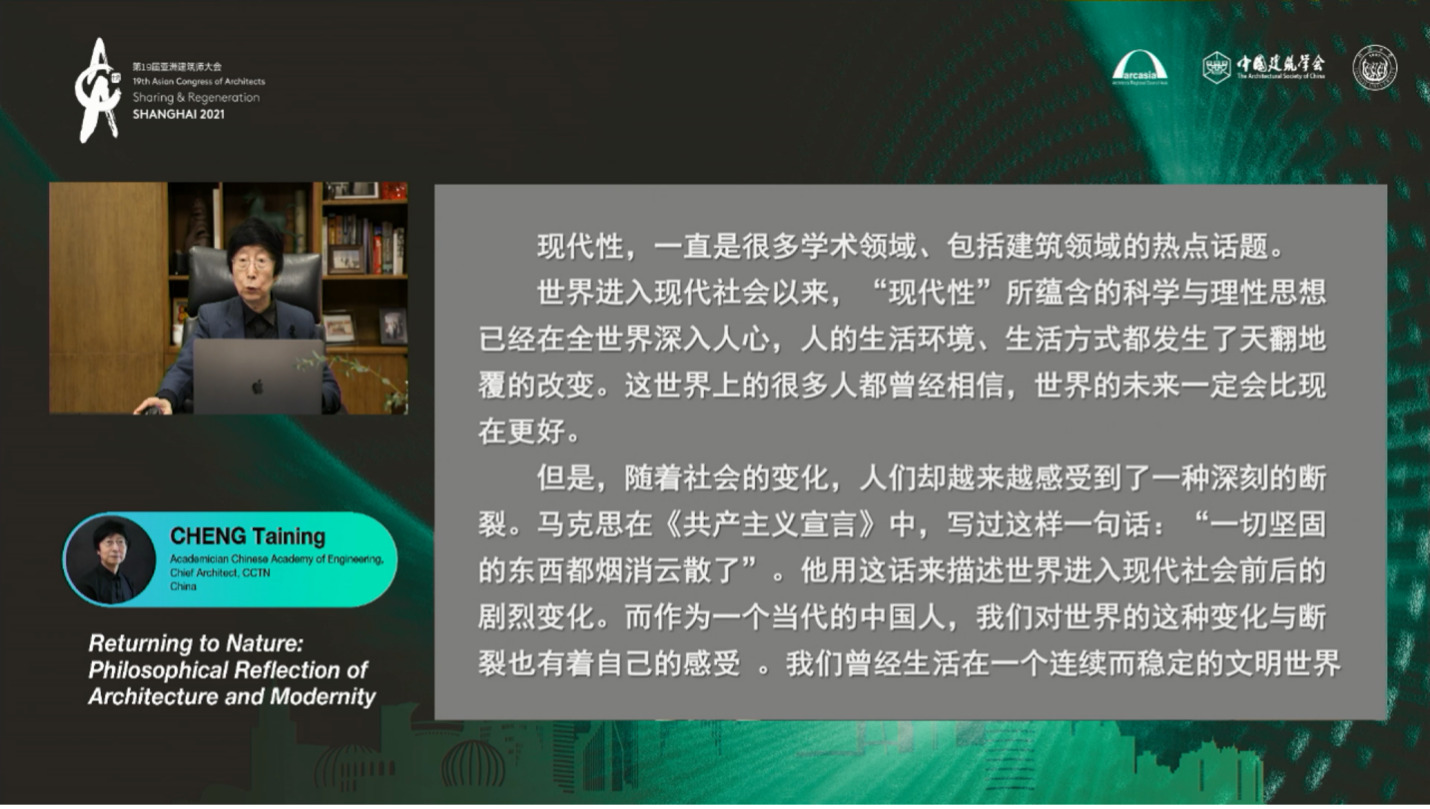
CAE Member Cheng Taining gave a speech on the “modernity” of Chinese architecture. He pointed out that scientific and rational specialization of work has gradually split the society. We have subdivided and simplified problems to get little relative truths but ignored the overall picture of the problems. Therefore, he advocated a new kind of “modernity”, which pays attention to return to nature and focuses on the integrity and ambiguity of things. On this basis, he showed the audience several important architectural works he completed via three videos. With the help of these works, he further explained his understanding of modernity and the relationship between man and nature.
Sarah Whiting

Sarah Whiting reviewed the development of globalization. She believed that after the industrial revolution, technology and the Internet have driven globalization, and different parts of the world have become interconnected with the development of globalization. Compared with the globalization during the imperial period, this is a new kind of peaceful globalization. However, the financial crisis in 2008 and the Occupy Wall Street Movement in 2011 led to partial deglobalization. Under such a background, she shared her thoughts on how globalization will develop in the future and on the role of designers in the new globalization through cases such as the City Hall Square in Copenhagen and Great Mosque of Paris.
Shirish Beri

Shirish Beri pointed out in his speech that many jobs in the current society are about mechanical and repetitive tasks and will be replaced by machines eventually. Architects need to pay more attention to the spirit, namely, architecture should have “emotions”. Buildings should not be as cold as machine, but be a place for human life.
Ary Indra

Ary Indra emphasized the importance of regional traditional craft for Asian architecture in the new era. Taking his own experience as an example, he described the construction process of using sketches, cooperating with local craftsmen and adopting the method of handicraft art instead of refined drawing methods. He believed that this construction method could enhance residents’ participation. It is not the architects who decide their lifestyles. The residents themselves put forward ideas and the architects turn these ideas into reality. The final plan should consider local conditions and residents’ needs and should be sustainable.
Wang Shu
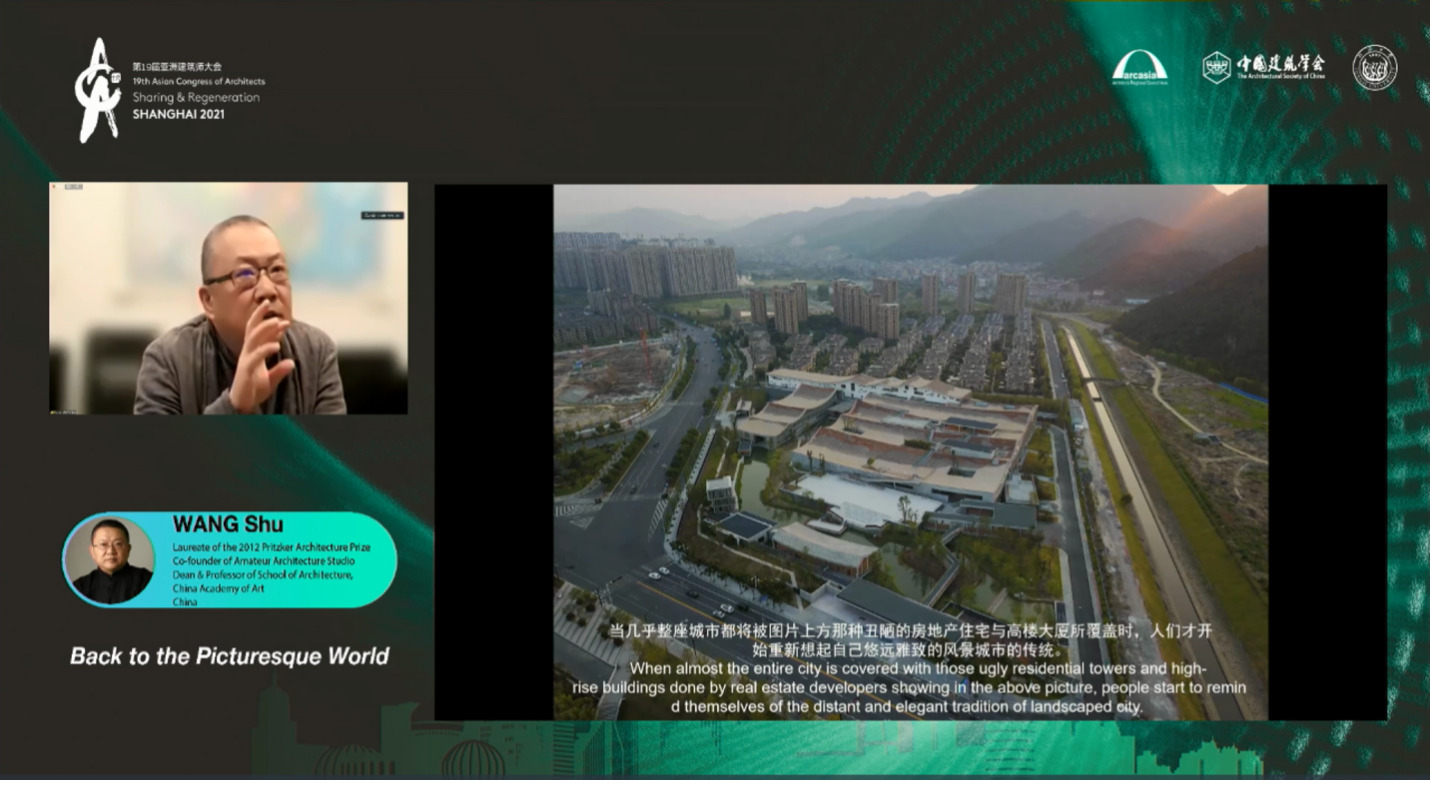
In his speech titled “Return to the Picturesque World”, Wang Shu mentioned a common phenomenon in Asian cities today – the gathering of people in big cities, which is abnormal. He believed that more efforts should be made to promote the development of small and medium-sized cities instead of seeing people flow into big cities. As for how to keep the traditional landscape and cultural characteristics of small towns in the development, Wang Shu introduced two projects that he was involved in Fuyang District, Hangzhou, and gave his own answer and thinking about this question by learning from the spatial expression techniques of “distant mountain”, “subordinate mountain” and “nearby mountain” in traditional Chinese landscape painting.
Rossana Hu

Through three practical case studies, Rossana Hu reflected on the three phenomena in contemporary urban renewal, namely reflective nostalgia, reshaping on the site and future relics in her speech. In the case of the Waterhouse at South Bund, the original concrete materials were retained, and new materials such as weathering steel were introduced to create an urban state that blended the old and the new elements by contrast, producing the feeling of reflective nostalgia. The project of the Yangzhou Slender West Lake Cultural Center drew on the spatial characteristics of Chinese courtyards, used a grid floor plan to determine the layout of walls and corridors, formed an enclosure with several yards and reshaped the regional and spatial characteristics on the site. The whiskey distillery project in Mount Emei adopted streamlined patterns to construct the building that enabled visitors to constantly see the surrounding green hills and produce the Eastern-style memorial.
Boonserm Premthada

The Thai architect Boonserm Premthada focused on the interesting topic of how to create spaces for animals and achieve harmony between man and nature. He pointed out that currently, people have always been put at the centre in architectural design. But in fact, people are just a kind of living things, and their needs should be considered together with the needs of nature and other living things. He introduced one of his special practical works – a museum for elephants. He believed that elephants are not our slaves, but our family members. The internal space of the building took into account the sizes of both humans and elephants and provided a special flow line for elephants. He pointed out that we often talk about humanistic care, which should not only exist between people but also between people and other things in the world.
Khondaker Hasibul Kabir
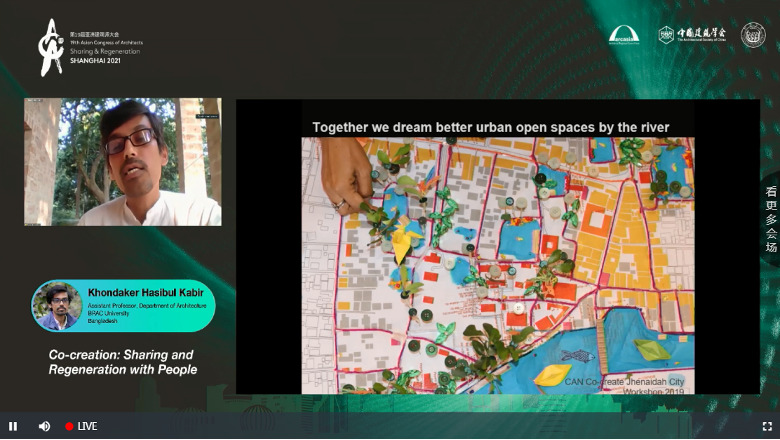
Khondaker Hasibul Kabir focused on architects’ social responsibility. He introduced a series of “co-creation” projects he had carried out in Bangladesh. These projects brought together the residents of the community and invited them to participate in community planning through methods such as drawing a map for the blocks. They jointly discussed which nodes needed to be renovated. The residents proposed ideas spontaneously and the architects provided strategies to turn these ideas into reality. Through these methods, they created public space and social welfare for local communities.
After the keynote speeches, Rita Soh, President of the ARCASIA, delivered a speech, expressing thanks to the eight guests and wishing other activities of the ACA19 a success. Finally, Professor Wu Jiang also expressed his gratitude to all the guests and keynote speakers in the opening ceremony.
Then, the opening ceremony and keynote speech session of the ACA19 came to a successful conclusion. Other activities such as the Friendship Night and sub-forums were held successively after the opening ceremony. You can learn more information about the congress on the official website: www.aca19shanghai.com.