
Shanghai, China — On 16–17 January 2026, the Architects Regional Council Asia (ARCASIA) marked a historic milestone with its leadership handover and first Office Bearers and Committee Chair meeting for the 2026-2027 term. Held in Shanghai, the two-day event formally inaugurated Professor Wu Jiang from Tongji University as the new President, succeeding outgoing President Ar. Saifuddin Ahmad, alongside an international symposium on the future of Asian architecture.
The handover meeting took place on the afternoon of 16 January at Tongji Architectural Design (Group) Co., Ltd. (TJAD).
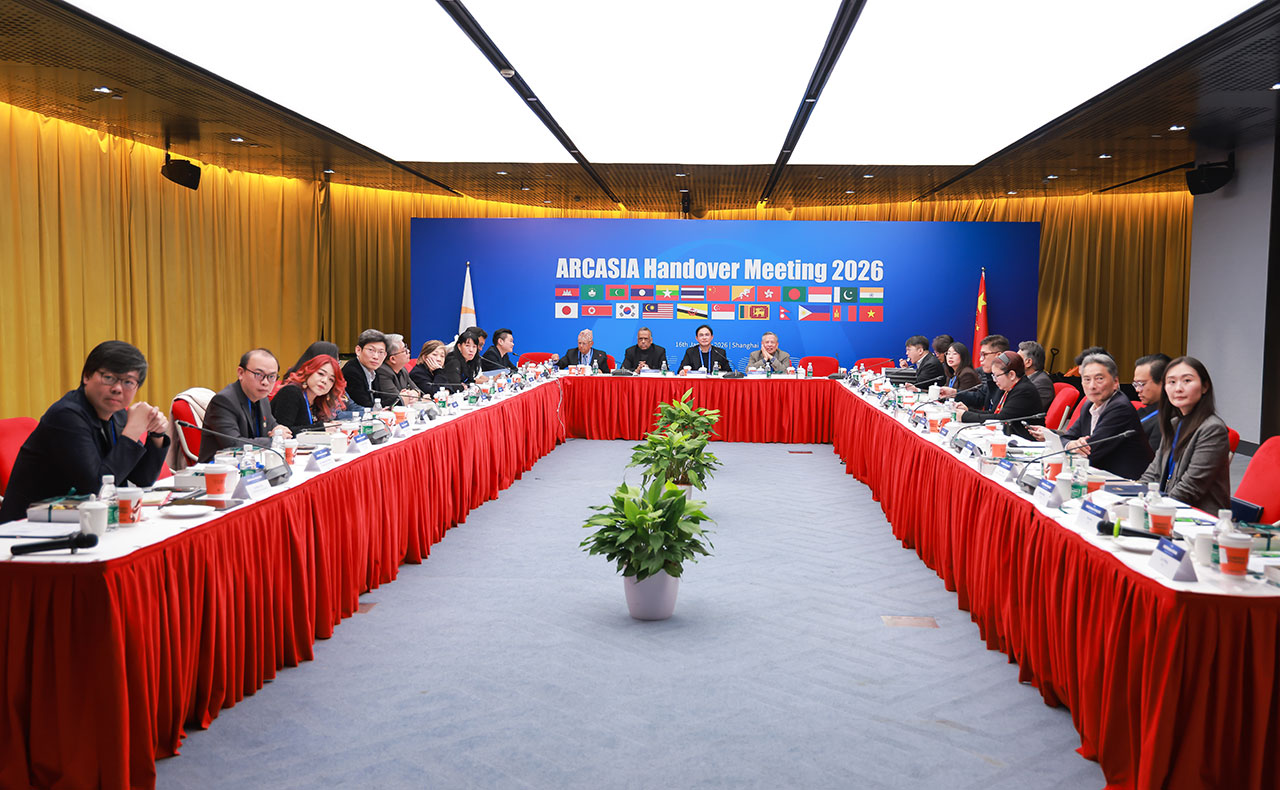
The session opened with a welcome address by ASC’s Mr. Li Cundong, who thanked the outgoing team and reaffirmed commitment to regional collaboration. Outgoing President Ar. Saifuddin Ahmad highlighted achievements in green architecture, professional standards, and youth development, expressing confidence in the incoming leadership. Formally assuming the role, Professor Wu Jiang outlined his vision centered on social responsibility, environmental stewardship, and technological innovation, emphasizing the role of Asian architects in advancing social equity and sustainable development.
The meeting included the signing of the Architecture Asia journal agreement, entrusting its management to the ASC and Tongji University for the next five years, followed by the formal transfer of secretariat documents and the signing of the Handover Letter between the outgoing and incoming presidents.
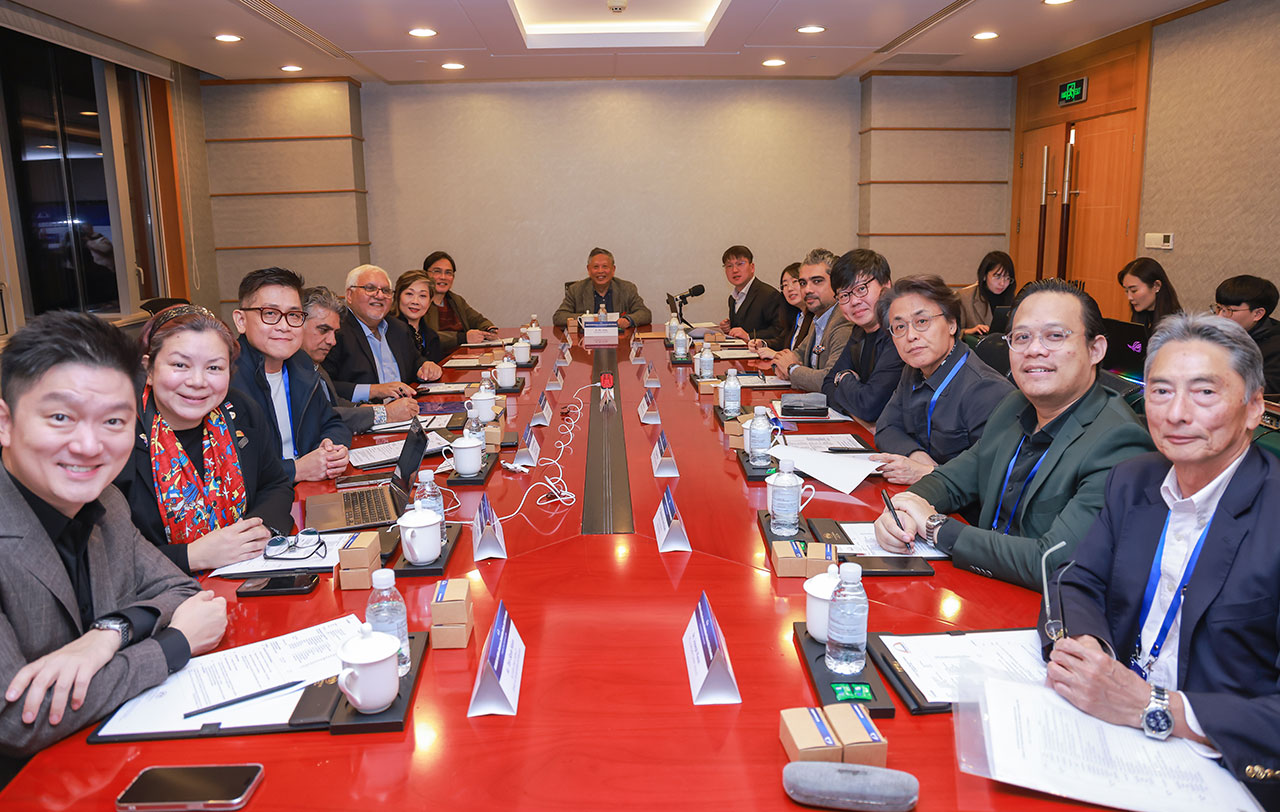
First OBCC 2026-2027 Meeting
That evening, the 2026-2027 Office Bearers and Committee Chairs convened for their first strategic meeting, presided over by Honorary Secretary Professor Zhou Minghao. President Wu Jiang opened the meeting by acknowledging the previous council’s strong foundation. Discussions focused on three key priorities: ensuring financial sustainability, addressing AI’s impact on architecture, and expanding regional architectural education collaboration. The meeting concluded with a clear roadmap for the 2026–2027 term, marking an energetic start to the new leadership’s tenure.
Grand Ceremony and International Symposium
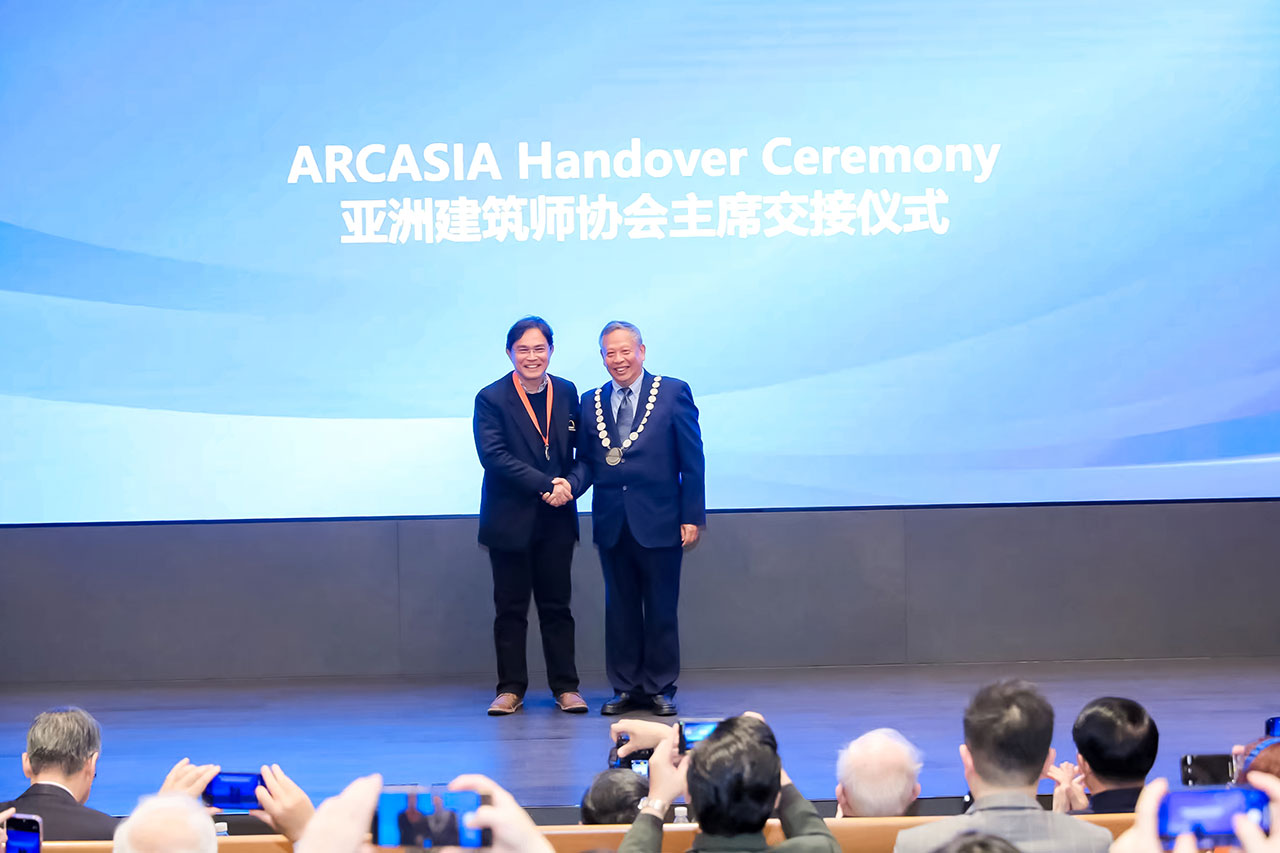
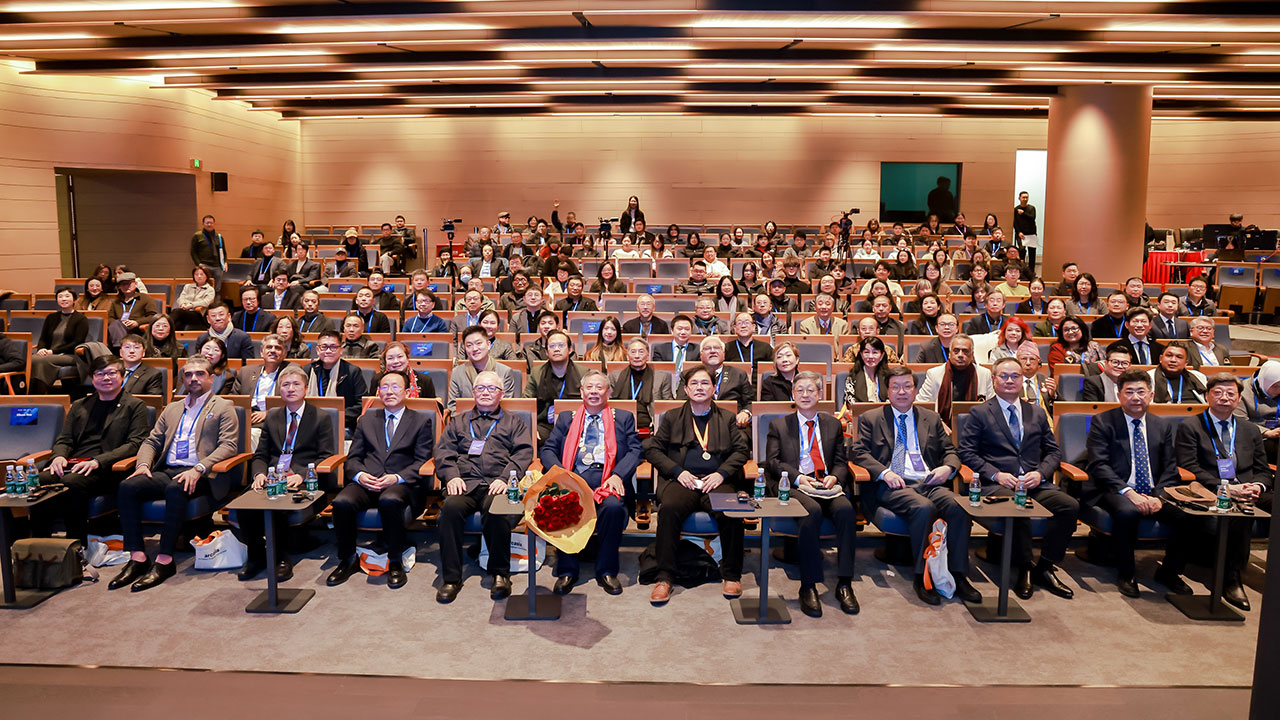
On 17 January, the International Symposium on Challenges and Opportunities in Asian Architecture and ARCASIA Presidential Handover Ceremony was held at the TJAD Lecture Hall. The morning opening ceremony featured distinguished representatives from Tongji University, national and Shanghai municipal government authorities, and the Architectural Society of China. All delivered congratulatory addresses, acknowledging Professor Wu Jiang’s election as the first ARCASIA President from China—a historic moment for the Chinese architectural community.
During the handover ceremony, Outgoing President Saifuddin Ahmad presented certificates of appreciation to the 2024–2025 Office Bearers and Committee Chairs, then he formally transferred the presidential chain to Professor Wu Jiang, officially installing him as the new ARCASIA President. The 2026–2027 Office Bearers and Committee Chairs were formally introduced and received commemorative badges from the new President.

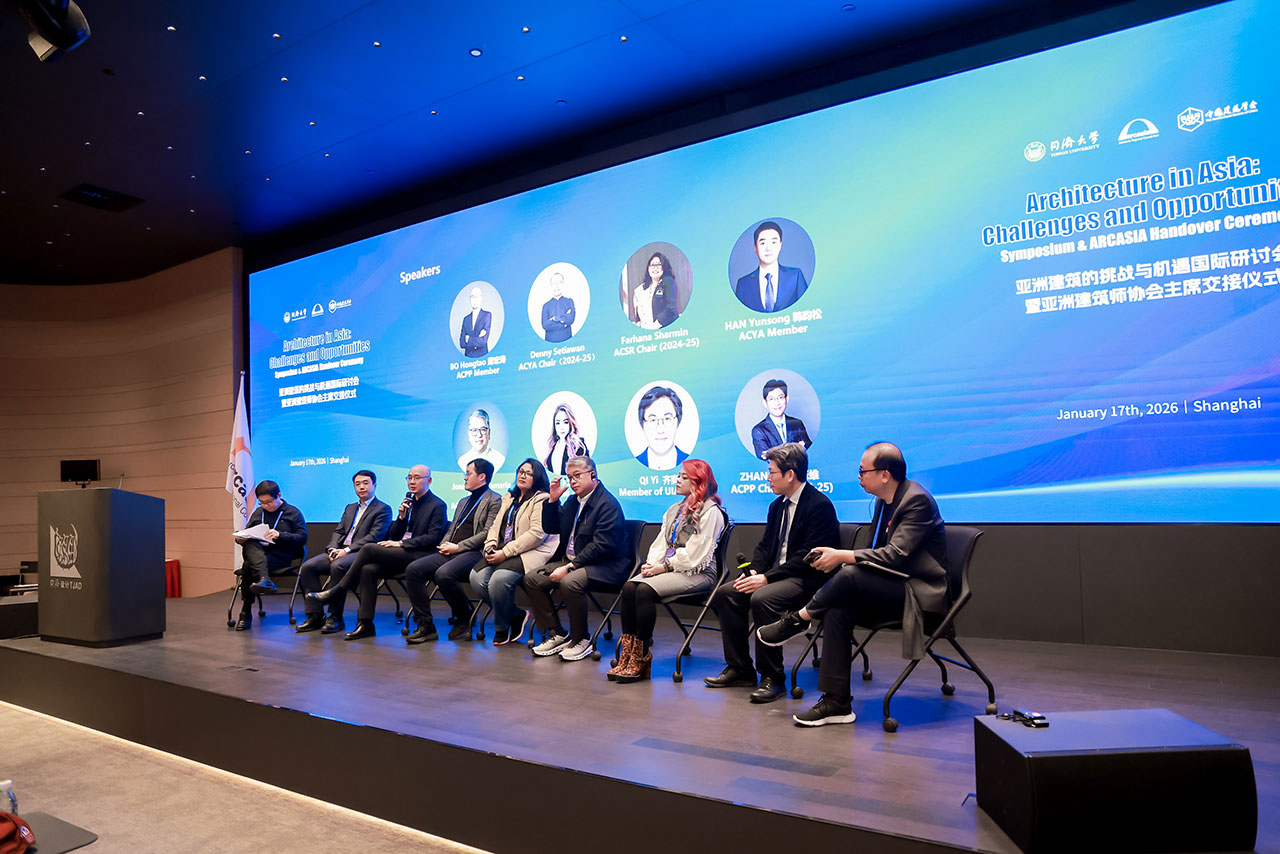
The symposium continued with keynote presentations, academic forums, and a roundtable discussion, where scholars and industry leaders explored critical topics such as digital transformation, sustainability, cultural heritage, and urban innovation. These exchanges fostered deep dialogue and interdisciplinary collaboration, offering valuable insights and a shared vision for advancing Asian architecture in response to global challenges.
The Shanghai meetings were more than a procedural transition; they were a powerful demonstration of unity and shared purpose within the Asian architectural community. With the new leadership team in place, ARCASIA is poised to build on its rich legacy through innovative strategies. Guided by President Wu Jiang’s vision, the organization is set to consolidate its leading role in the global architectural landscape, advocating for a more inclusive, resilient, and sustainable built environment across Asia and beyond.